Why peptide infused hair serum is the best for hair regrowth and mentainance
Table of contents Hair regrowth timelines Hair-growth bundles for men and women Hair-growth supplements and vitamins Which hair growth kits are FDA-approved or backed by clinical evidence? ReggeneX Labs: ReggeneX Hair Growth Kit Build a routine that fits your next step Frequently Asked Questions…
Table of contents
- Hair regrowth timelines
- Hair-growth bundles for men and women
- Hair-growth supplements and vitamins
- Which hair growth kits are FDA-approved or backed by clinical evidence?
- ReggeneX Labs: ReggeneX Hair Growth Kit
- Build a routine that fits your next step
- Frequently Asked Questions
The best hair-growth bundle isn’t necessarily different for men and women: a hair growth kit can suit either, but the routine should reflect your pattern of thinning, scalp needs and consistency. Visible density changes may take 60-90 days, so it helps to think in terms of a steady routine rather than a quick fix.
A hair growth kit can bring several routine steps together, but the products included matter more than the bundle label. A topical serum can sit alongside cleansing and conditioning, while supplements provide a separate form of nutritional support. Choose a combination based on your goal and the directions for each product.
This guide explains how to assess hair growth kits, where supplements may fit, and what can affect the time it takes to notice changes. You’ll find practical guidance for comparing serum-led, supplement-supported, and combined routines, and choosing a consistent plan for scalp or beard care.
Key Takeaways
- Set realistic expectations by following a consistent routine and understanding what can affect visible progress.
- Assess bundle components by your hair-care needs, not by gender labels alone.
- Learn when a hair growth supplement may complement topical care and why supplements are not a substitute for addressing the cause of thinning.
- Explore how a personalized scalp consultation can help shape a routine around your goals.
Table of Contents
Hair regrowth timelines
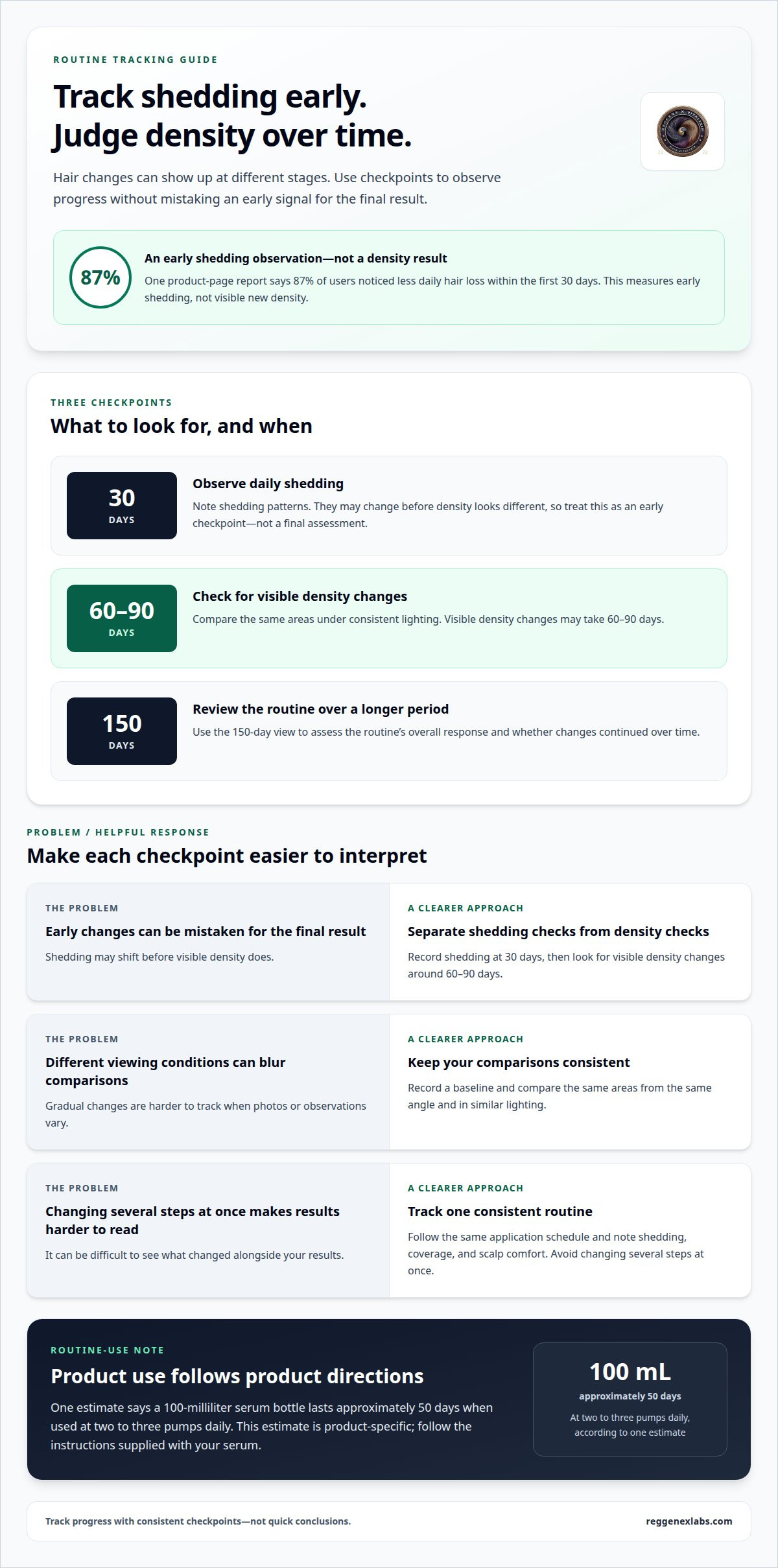
Hair regrowth follows a cycle, so changes in shedding and density can appear at different stages. One product-page report says 87% of users noticed less daily hair loss within the first 30 days. That measures early shedding, not visible new density.
Visible density changes may take 60-90 days. Assessing growth potential calls for a longer view, with a 150-day journey recommended for evaluating progress. These milestones help you track changes without treating early signs as the final result.
| Timeline | What to observe | How to interpret it |
|---|---|---|
| First 30 days | Daily shedding patterns | Shedding may change before density looks different. |
| 60-90 days | Visible density changes | Compare the same areas under consistent lighting. |
| 150 days | Overall response to a routine | Review whether changes continued over a longer period. |
Use the 150-day view to assess your routine, with earlier checkpoints for tracking changes rather than judging final density.
Consistency makes it easier to assess a routine. Follow the same application schedule and note changes in shedding, coverage, and scalp comfort. Photos taken from the same angle and in similar lighting can help you track gradual changes. Avoid changing several steps at once, so you can better see what has changed alongside your results.
Plan product use around its directions, not an assumed timeline. One estimate says a 100-milliliter serum bottle lasts approximately 50 days when used at two to three pumps daily. That estimate is product-specific, so follow the instructions supplied with your serum.
- Record a baseline before starting, including the areas you want to monitor.
- Review shedding at 30 days and density around 60-90 days.
- Assess the full routine over 150 days, tracking consistency and visible changes.
Hair-growth bundles for men and women
Hair growth kits can suit different users, so choose based on the concern, application area, and product directions rather than gendered packaging. The right set depends on its contents and how each product fits your routine.
Kits for Different Hair-Loss Causes
Start by considering the concern you want to address, since no kit should be assumed to suit every cause of thinning. A scalp-care set, for example, differs from products intended for beard care. Choose products whose ingredients and instructions fit your needs. If you’re unsure where to start, a hair and scalp assessment can help clarify your next steps.
Insurance coverage and HSA or FSA eligibility depend on your plan and the reason for purchase. Hair-care kits aren’t automatically eligible because they’re marketed for regrowth, so review your plan’s terms.
FDA-Approved and Evidence-Backed Kits
FDA approval and clinical evidence are separate considerations, and a kit’s label establishes neither. Look for evidence about the specific formula and intended use. Don’t assume findings for one ingredient apply to every product in a set.
Minoxidil products work differently from peptide serums. Follow the product label for intended users and application. Scalp irritation and increased initial shedding are reported risks. If you’re considering minoxidil alongside prescription hair-loss treatment, ask the prescribing clinician to assess the ingredients and application schedule together.
Kit Costs and Payment Eligibility
In the United States, hair growth kit costs vary depending on what’s included, such as serum, shampoo, or supplements. Compare each product’s contents and directions rather than assuming all kits are equivalent. Insurance, HSA, and FSA eligibility depends on the applicable plan terms, not the bundle format alone.
Use each product’s instructions to build a consistent routine. Keep track of what you apply and when, and consider labels and directions before combining treatments. This makes the routine easier to follow and discuss with a healthcare professional.
Hair-growth supplements and vitamins
A supplement may provide nutritional support as part of a hair-care routine, but it isn’t a universal answer to thinning. Its relevance depends on your diet, health, and the reason your hair is changing. Topical serums are applied to the scalp, while supplements are taken orally, so they serve different roles.
Start with the label, not a list of trending ingredients. Check the amount per serving, directions, and whether the formula duplicates nutrients in another supplement you take. For example, a multivitamin and a separate hair formula may contain overlapping ingredients. A pharmacist or healthcare professional can help you assess your products and circumstances.
Vitamins and minerals support normal body functions, but taking more doesn’t automatically lead to more hair. Supplements are most relevant when they address a nutritional need. Hair shedding can have causes beyond nutrition, so a capsule alone may not address the underlying issue. Consider the broader picture, including changes in diet, health, and hair-care practices.
- Read the serving directions: Follow the product label rather than taking extra capsules to speed results.
- Review the ingredient list: Look for overlap with other supplements and note ingredients you already consume.
- Track one routine: Record when you start a supplement and any changes, without adding several new products at once.
Pairing an oral supplement with a serum may make a routine more complete, but it doesn’t mean the combination will address every cause of thinning. Apply topical products according to their directions and take supplements as their labels instruct. If you use prescription medicine, have a health condition, or are pregnant, discuss supplements with a qualified healthcare professional before adding them.
Use a simple decision process: identify your goal, review your diet and current products, then decide whether a supplement is appropriate. Assess a hair growth kit that includes supplements by its individual ingredients and directions, not the bundle label alone. Consistency matters, as does choosing products that fit your needs.
Which hair growth kits are FDA-approved or backed by clinical evidence?
FDA approval and clinical evidence are different claims. A study may report outcomes for a particular formula, but that alone doesn’t establish FDA approval or show that every kit works the same way. Read the details about the product, participants, study period, and measured outcome before comparing claims.
For example, a product-page account describes an independent user study involving 312 men with early-stage thinning over 150 days. It reports an average of 13,500 new hairs, a 17.3% improvement in density, a 57% reduction in hair loss, and a 27% increase in follicle activation. These are reported study outcomes, not guarantees for individual users or evidence about other formulas.
Another product-page claim cites a maximum hair-density increase of 52% in a Capilia Longa clinical study. It also reports a 42% follicle reactivation rate. A maximum result is not the same as an average, so don’t compare it directly with an average from a different study.
Use this evidence checklist when assessing a kit:
- Study population: Check whether participants resemble your age, sex, and hair-loss pattern.
- Duration: Compare the study period with the time needed to assess your routine.
- Outcome: Separate reduced shedding from density changes or follicle activation.
- Product identity: Match the tested formula to the product being advertised.
A kit’s ingredients and supporting evidence matter more than broad phrases such as “clinically backed.” Findings for men with early-stage thinning may not apply to women, other causes, or different formulas. A clinical study also doesn’t automatically make a bundle FDA-approved. Assess each claim on its own terms.
Look for evidence that identifies its participants, duration, and measured outcome, then compare those details with your needs. Treat findings as specific to the study, not as promises about your results.
ReggeneX Labs: ReggeneX Hair Growth Kit
The ReggeneX Hair Growth Kit offers a starting point for building a hair-care routine. You can pair it with ReggeneX Vitalixir Hair Regrowth Serum or ReggeneX Vitalixir Shampoo as part of your scalp-care plan. ReggeneX Labs products undergo clinical testing.
If you’re unsure which steps suit your scalp or thinning concerns, the ReggeneX Vitalixir Hair & Scalp Consultation offers a personalized evaluation and routine recommendations. It can help you choose a plan that fits your needs and daily habits, instead of adding products without a clear purpose.
Choose the kit if you want a coordinated starting point, or the consultation if you need help shaping your routine. ReggeneX Labs offers both, so choose the option that best fits your hair-care goals.
Build a routine that fits your next step
Choose a routine you can sustain, based on your scalp-care needs, daily habits, and comfort with topical or nutritional steps. A hair growth kit can add structure, but the most useful plan is one you understand and can follow consistently.
ReggeneX Labs offers the ReggeneX Vitalixir Hair Regrowth Serum and Shampoo, as well as a Hair & Scalp Consultation with personalized evaluations and routine recommendations. Book a consultation to shape a practical care plan around your goals and decide which steps belong in your routine.
Bring your questions about scalp care, product use, or routine planning to the conversation. Contact ReggeneX Labs to explore a thoughtful next step for your hair-care goals. A considered routine starts with care that feels right for you.
Frequently Asked Questions
Are hair growth bundles suitable for both men and women?
Often, yes, but suitability depends on the products’ directions and intended application area, not the kit label alone. If a product is designed for the scalp, don’t assume it’s also intended for facial hair. Review ingredient information for potential sensitivities and consider whether the routine addresses your concern. Shared packaging doesn’t make every component suitable for every user.
Can I purchase individual products from a bundle separately?
Some brands sell kit components individually, while others offer certain products only as a set. Review the options for the specific kit and compare each item’s directions with the set’s routine. Buying separately can make sense if you already own a component, but make sure the remaining products still form a practical routine.
What is a hair growth kit and what products does it include?
A hair growth kit groups products intended to support a hair-care routine, but there’s no single standard format. Check the contents list before choosing: identify each product’s purpose, application area, and directions. Look for duplicated ingredients or overlapping steps, too. This helps you understand what you’ll use rather than relying on the bundle name.
How do hair growth kits compare for men and women?
Compare the directions, formulation, and intended application areas of each kit. A label aimed at men or women doesn’t by itself show whether the products fit your needs. For example, someone concerned about the hairline may need different application guidance from someone seeking general scalp care. Choose based on your concern and the product instructions, not gendered packaging alone.
How long does a hair growth kit take to show results?
There isn’t one timeline for every routine. The cause of thinning, the products used, and how consistently you follow their directions can all affect what changes you notice and when. Assess the same area under similar conditions, and distinguish changes in shedding from changes in coverage. If hair loss changes suddenly, seek medical advice.