Personalized Hair Care Consultation: What Your Routine May Include
Your hair type can shape more than the products you use; it can influence your care routine, treatment choices, and the styles that suit your needs. A personalized hair care consultation considers your hair texture, scalp condition, complexion, current concerns, and preferred look, then uses those d…
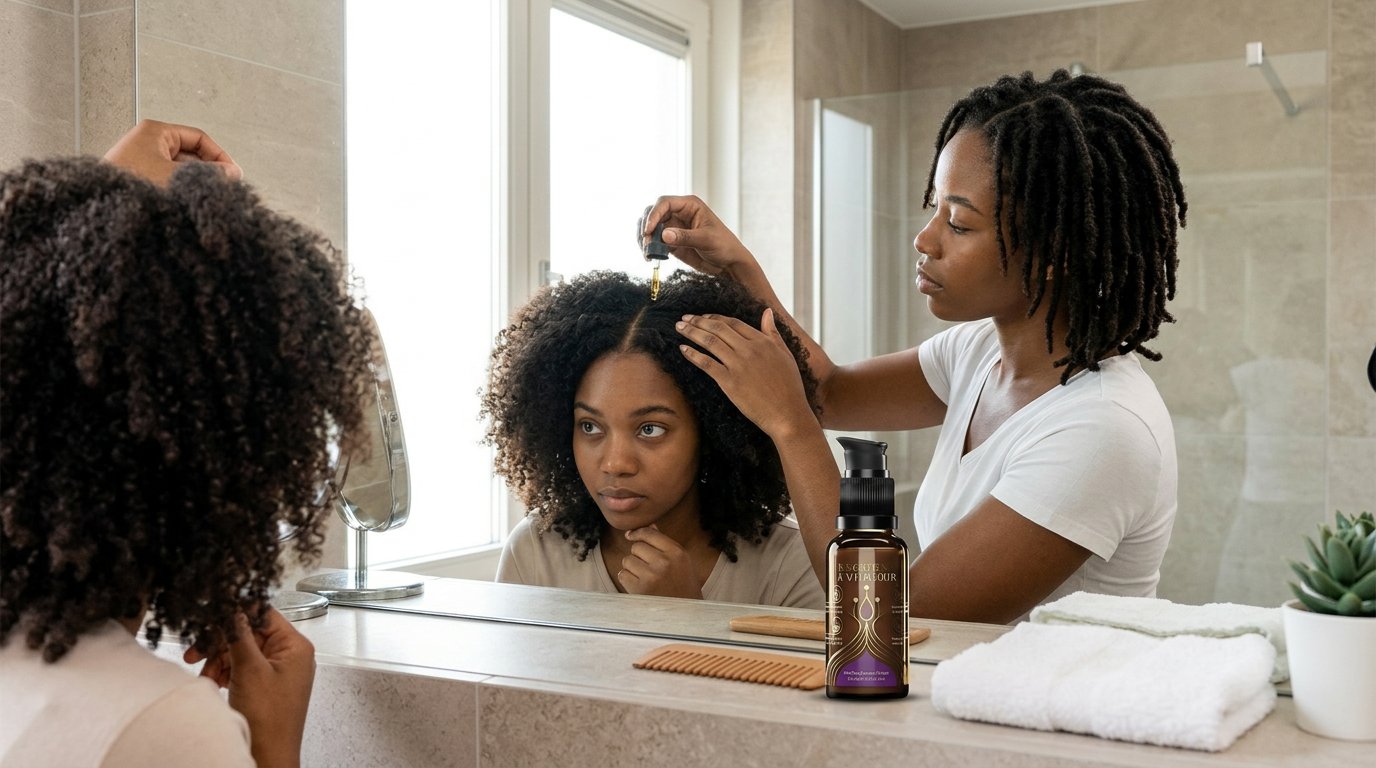
Your hair type can shape more than the products you use; it can influence your care routine, treatment choices, and the styles that suit your needs. A personalized hair care consultation considers your hair texture, scalp condition, complexion, current concerns, and preferred look, then uses those details to shape a tailored regimen, maintenance plan, and styling approach; for example, cleansing may be recommended two to four times per week depending on scalp type.
If a routine has felt mismatched, that doesn’t mean your hair is difficult to care for; it may simply need a plan built around its characteristics and your priorities. You’ll learn how hair type and complexion can guide treatment and styling choices, what ongoing maintenance may involve, and how to build a routine that fits your needs and everyday life.
Key Takeaways
- A tailored routine can align cleansing and product choices with your scalp’s needs, hair texture, and day-to-day habits.
- Your hair type and complexion can inform which cuts, styles, and color directions may complement your features.
- Consultation costs vary with the service and what it includes; understand the scope before deciding what fits your needs.
- A useful specialist consultation should connect your concerns and goals to clear recommendations for care, treatment, and maintenance.
Table of Contents
WHAT WILL MY TAILORED HAIR CARE REGIMEN LOOK LIKE?
A personalized hair care consultation connects your scalp needs, hair texture, and goals with practical product recommendations. A routine might begin with cleansing at a frequency suited to your scalp and how quickly your roots feel oily. A dry or sensitive scalp may call for gentler cleansing, while product buildup can affect how often you wash. Starting with the essentials helps keep your routine focused rather than crowded.
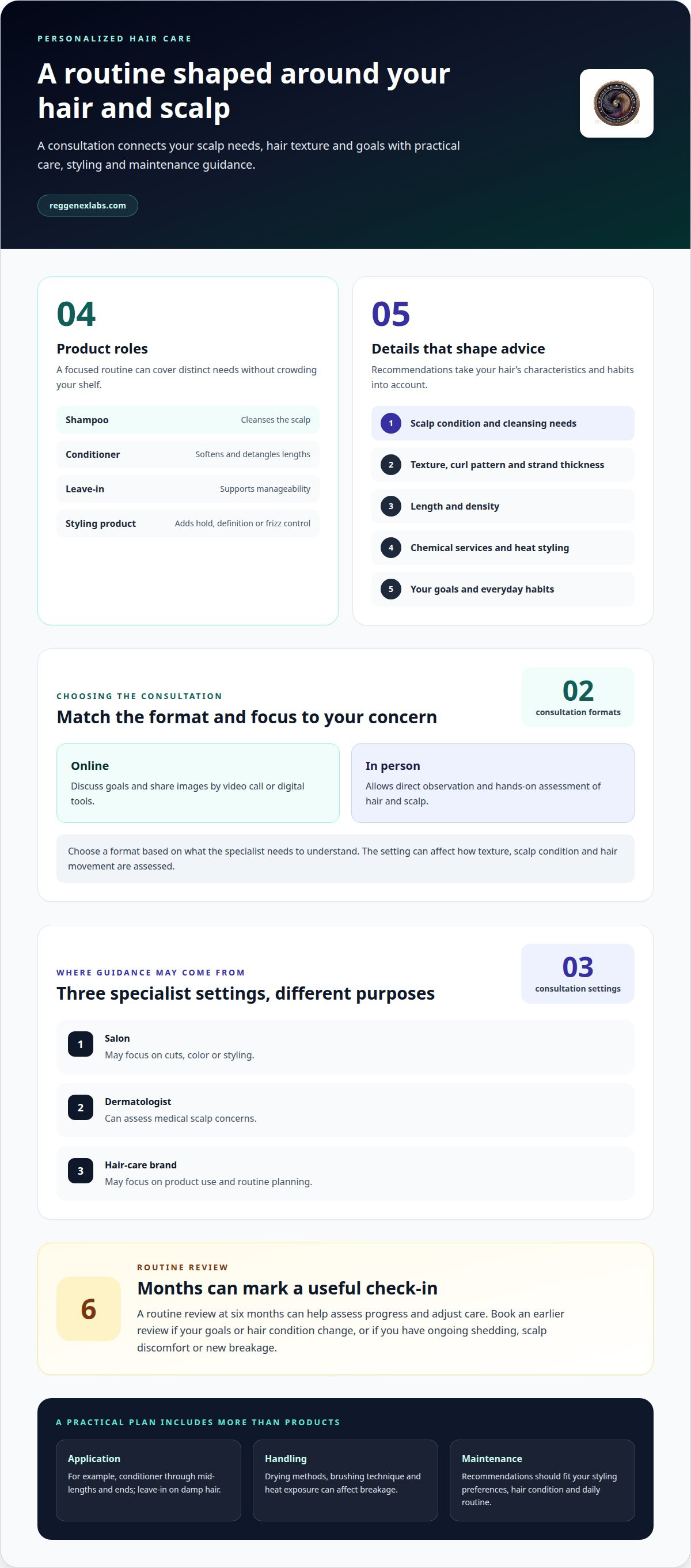
Recommendations can cover several product categories, each with a distinct role. Shampoo cleanses the scalp, while conditioner helps soften and detangle hair lengths. A leave-in product can support manageability after washing, and a styling product can provide hold, definition, or frizz control. If breakage is a concern, handling habits and conditioning needs may matter as much as product choice. Hair length, curl pattern, chemical services, and heat styling all help shape the recommendations.
Post-wash guidance makes a routine easier to follow. A specialist might suggest applying conditioner through the mid-lengths and ends, then using a leave-in product on damp hair. Fine hair may benefit from lighter textures than dense curls. Drying methods, brushing technique, and heat exposure can also affect breakage, so useful guidance explains both what to apply and how to handle your hair.
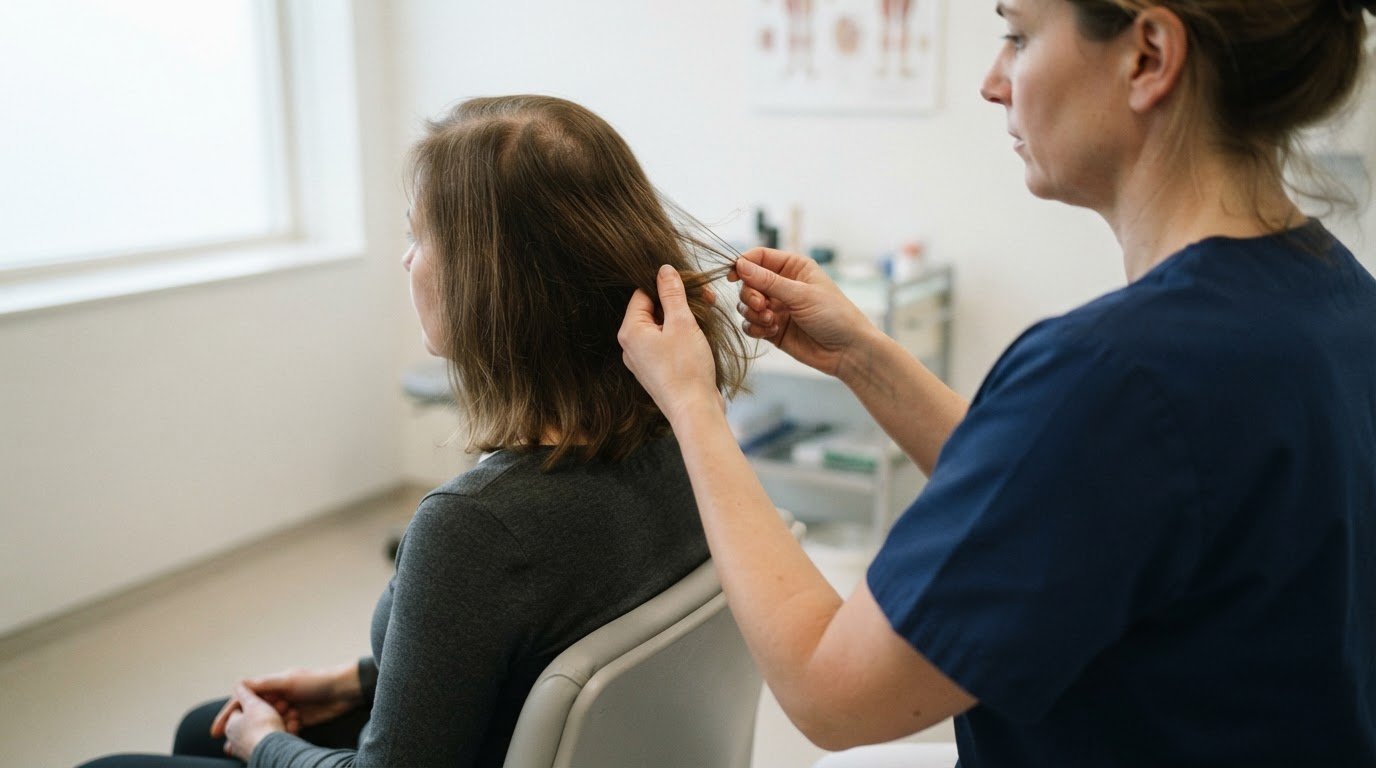
Virtual consultations can use a video call or digital tools to discuss your goals and review photos. In-person appointments allow direct observation and hands-on assessment. Either format can clarify styling preferences, but the setting affects how the specialist can assess texture, scalp condition, and hair movement.
Salons, dermatologists, and hair-care brands may offer consultations with different focuses. A salon may concentrate on cuts, color, or styling; a dermatologist can assess medical scalp concerns; and a brand consultation may focus on product use and routine planning.
Book a follow-up when your goals or hair condition change, or when you need to refine product use. A routine review at six months can help assess progress and adjust care. Ongoing shedding, scalp discomfort, or new breakage may also make an earlier review useful.
Hair type and complexion considerations
Your hair type affects how a cut, color, and styling plan work in daily life. A stylist may consider curl pattern, strand thickness, density, length, and how your hair responds to humidity. For example, layers can add movement to dense curls, while fine, straight hair may need a shape that preserves fullness. These details also help balance your styling preferences with practical limits, such as the time you have for drying or regular heat styling.
Hair condition adds another layer to the assessment. Before suggesting a major change, a specialist may consider dryness, breakage, color history, and heat-tool use. If repeated bleaching has left your ends fragile, a gradual color plan may better support length retention than another intensive service. Scalp condition matters too: visible irritation or persistent discomfort calls for a different conversation from routine styling needs.
Complexion can help guide color and contrast. A stylist can discuss how a potential hair color or cut may work with your hair type and complexion. Rather than relying only on a “warm” or “cool” label, consider your natural coloring, preferred contrast, and the upkeep a shade requires. A subtle brunette change and a high-contrast blonde look create different visual effects and maintenance demands.
Bring a clear example of the result you want, such as a photo of a bob with soft layers or a defined curl shape. Explain what you like about it, then discuss differences in texture, density, or face framing. This helps make recommendations more precise and keeps the plan aligned with your hair condition and styling habits.
Hair type and complexion guide choices, not fixed rules. A useful consultation weighs both alongside your goals, past treatments, and everyday routine. If you want to discuss scalp and hair needs as part of that planning, explore a tailored hair consultation.
How much does a personalized hair consultation cost in the US?
For readers in the Netherlands, the useful first question is what kind of guidance you need. A style-focused appointment may center on a cut or color decision. A hair and scalp consultation can instead focus on concerns such as thinning, scalp comfort, or routine planning. These sessions serve different purposes, so their scope matters more than their label.
Before choosing an appointment, identify the decision you want help with. You may want to care for your hair after coloring, make your routine easier to maintain, or discuss changes in density. A clear goal keeps the conversation focused and helps you understand whether the appointment offers styling advice, product guidance, or an assessment of hair and scalp concerns.
Consider what the consultation includes. Does it cover your hair history and current routine? Will you leave with specific recommendations, or is the session focused on one style choice? Someone considering a new cut may need guidance on shape and upkeep, while someone concerned about scalp changes may need a different discussion. The right scope depends on the question you bring.
Format can shape the experience too. An online appointment makes it convenient to discuss your goals and share images, while an in-person appointment allows direct observation of your hair and scalp. Neither format suits every concern equally. Consider what the specialist needs to understand, then choose the setting that supports that discussion.
Across the Netherlands, compare consultations by their purpose, format, and the recommendations they provide. A clear description of the appointment helps you decide whether it matches your needs. Keep your main concern in focus, and choose guidance that addresses it directly rather than a session built around a different goal.
How do I find a qualified hair care specialist near me?
Start with the concern you want addressed. A stylist focuses on appearance, including cuts, color, and styling plans. A hair and scalp consultation considers those concerns alongside routine recommendations. The roles can overlap, but their aims differ. For example, a request for layered curls is primarily a styling discussion, while thinning hair calls for attention to scalp and shedding concerns.
Look for a consultation that begins with your goals and hair history, not just a product recommendation. Useful topics include past color or chemical services, heat styling, breakage, scalp comfort, and the routine you can maintain. A specialist can use these details to shape practical guidance. If you bring photos, choose examples that show the cut, texture, or color effect you want.
Notice how the consultation connects observations with advice. If your hair feels fragile after bleaching, for instance, a useful discussion should account for that history before proposing another color change. Recommendations should explain the purpose of each step, such as cleansing, conditioning, or styling, and how it supports your goals. Clear reasoning makes a plan easier to follow.
Consider the appointment format and what it can assess. An in-person session allows direct observation of your hair and scalp; a virtual appointment can discuss your concerns and review images. Either way, the consultation should make room for your questions and distinguish styling preferences from scalp-related concerns. A concise written routine can also help you remember what to use and when.
Choose the type of specialist according to the service you need, then assess whether the consultation addresses that need directly. A cut or color goal calls for styling expertise; persistent scalp symptoms or hair loss require a health-focused discussion. For tailored routine guidance, explore hair care consultation support to connect your concerns with personalized recommendations.
ReggeneX Labs: ReggeneX Vitalixir Hair & Scalp Consultation
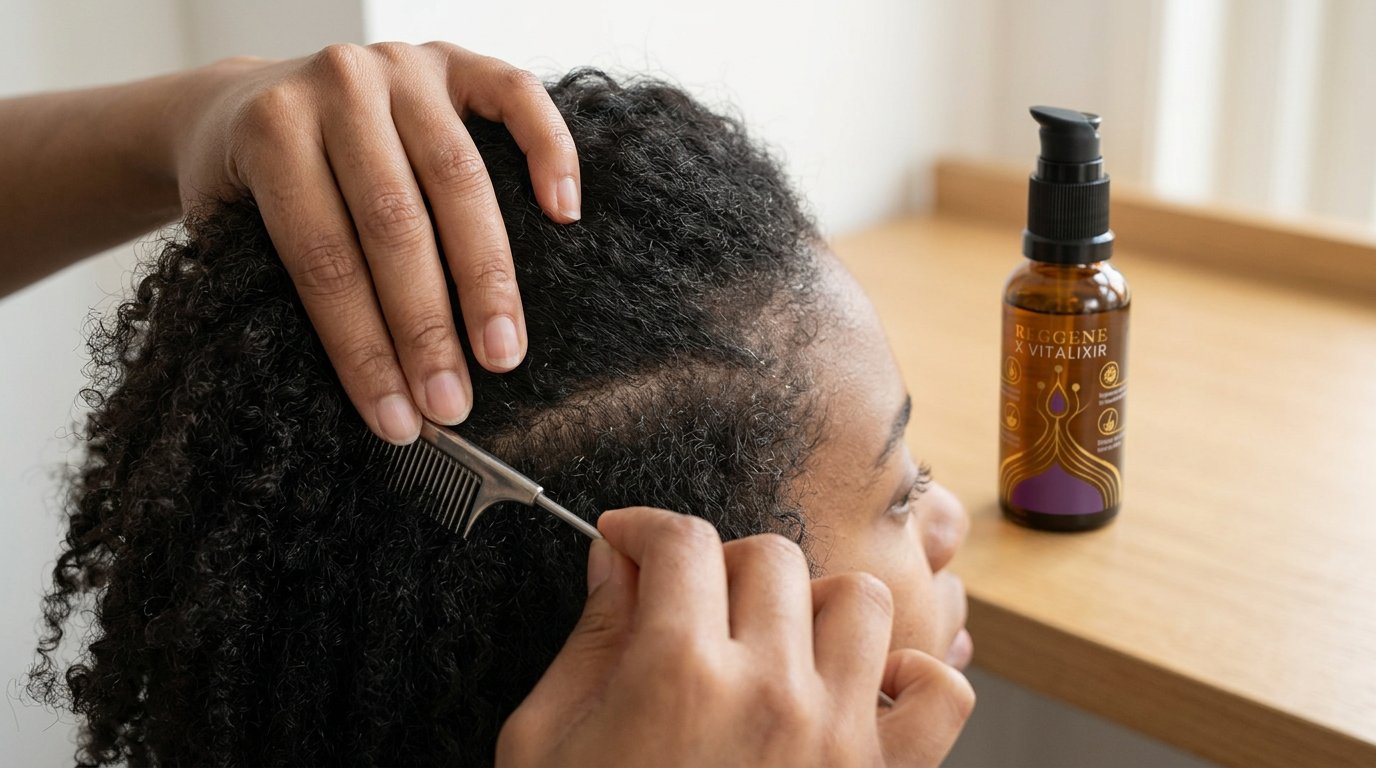
The ReggeneX Vitalixir Hair & Scalp Consultation offers personalized evaluations and routine recommendations for your hair and scalp concerns. It can help when you want clearer guidance on thinning, scalp care, or organizing your routine. Recommendations may include ReggeneX Vitalixir Shampoo, Reggene X Vitalixir Conditioner, and ReggeneX Vitalixir Hair Regrowth Serum.
A consultation can connect your goals with practical product choices and consistent care. Share the concerns you want addressed, such as changes in density or difficulty maintaining a routine, so the guidance reflects your priorities. Contact ReggeneX Labs to discuss the Hair & Scalp Consultation.
Shape your next step around your hair goals
Give your next hair decision a clear starting point. Choose the change that matters most, then consider what you want your care to support over time. A personalized hair care consultation can help turn that priority into a considered next step, without trying to change everything at once.
ReggeneX Labs brings its hair-care focus to each conversation, helping you approach your goals with greater clarity. Start by identifying what you’d like to discuss, whether it’s a new concern or a routine you want to reconsider.
Contact ReggeneX Labs to discuss your hair and take the next step at your own pace.
Frequently Asked Questions
How will my hair type impact the process and final outcome?
Your hair type affects how a recommended cut, styling method, or care product works. A style designed to add volume, for example, may need a different approach for dense curls than for fine, straight strands. Hair length and styling habits matter too. Share what you want to change and what you want to preserve, such as curl definition, length, or a natural-looking finish.
What is a hair consultation?
A hair consultation is a focused discussion about your goals and the changes you’re considering. You might discuss a new shape, color direction, scalp concern, or routine challenge. The specialist uses that conversation to understand your priorities and offer relevant guidance. If you’re considering a major color change, mention previous coloring so the discussion accounts for your hair’s history.
How do I know if my routine needs to be changed?
Consider reviewing your routine if your products or habits no longer suit your needs. A style that has become difficult to maintain, new breakage after frequent heat styling, or a change in scalp comfort may prompt a fresh assessment. Note what changed and when you noticed it. That context can help clarify whether the issue relates to a product, your goals, or your habits.
How long does it take to see results from a personalized hair care routine?
Noticeable results from a personalized hair care routine typically take 3 to 6 months. The timeframe depends on the goal: improving manageability may feel different from addressing visible changes in density. Consistent use and a routine suited to your hair both matter. Track the specific outcome you care about, such as easier detangling or less breakage, rather than changing several products at once.
Is it normal to experience more shedding when starting a new treatment?
Don’t automatically assume increased shedding after starting a treatment is a normal adjustment. Timing alone can’t identify the cause. Consider what else changed, including other products, styling habits, or recent stress, and note when the shedding began. If it continues or concerns you, a healthcare professional can assess your individual situation and help determine an appropriate next step.
WHAT IF MY HAIR CONDITION CHANGES OVER TIME?
Adjust your care plan when your hair condition, scalp needs, or goals change. A routine that suited you before a color service, for example, may need revisiting if your hair later feels more fragile. Record the change and the products or habits involved. A follow-up consultation can use that history to refine recommendations rather than treating your routine as fixed.