Hair Growth Serum Results: When to Expect Visible Changes
Hair growth serums may support thinning hair, but visible change takes time rather than arriving overnight. Hair growth serum results expectations should allow 8 to 12 weeks of regular use before judging early changes, while fuller results may take around 3 to 4 months.It’s understandable to want qu…
Hair growth serums may support thinning hair, but visible change takes time rather than arriving overnight. Hair growth serum results expectations should allow 8 to 12 weeks of regular use before judging early changes, while fuller results may take around 3 to 4 months.
It’s understandable to want quick reassurance when your hair seems thinner. Early changes can be subtle, and progress depends on the cause of thinning, the formula and consistent use. Applying more serum won’t speed up results, and changes in how your hair feels may appear before any difference in density.
This guide explains how hair growth serums may fit into a routine, what to expect at different stages and which factors can influence progress. You’ll also learn how a thoughtful routine and a personalized hair and scalp assessment can help you choose practical next steps.
Key Takeaways
- Serums may support thinning hair, but consistent use and correct application matter more than applying extra product.
- Give a routine time to work: early changes can be subtle, while visible differences in density may take several months.
- Learn how ingredients such as peptides and caffeine may support the scalp, and why the formula matters.
- Spot habits and setbacks that can affect progress, so you can build a more consistent hair-care routine.
Table of Contents
Are Hair Growth Serums Effective for Thinning Hair?
Hair growth serums can support scalp care, but results depend on the formula and the cause of thinning. They are not a universal treatment for every type of hair loss. For realistic hair growth serum results expectations, distinguish healthier-feeling strands from changes in density. Hair follicles respond over time, so daily use does not mean visible growth will appear right away.
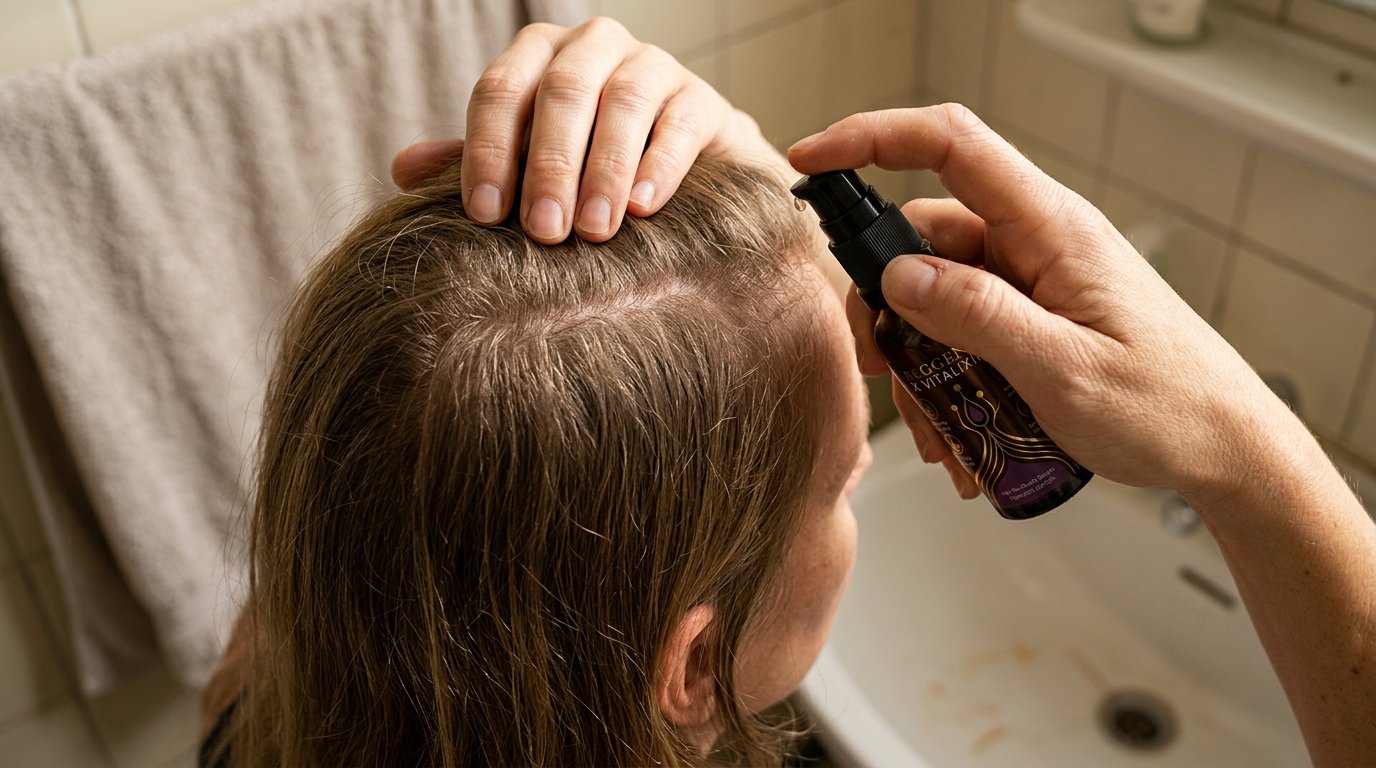
Consistency matters because missed applications interrupt the routine. Follow the product label for frequency and amount. If directions call for a few drops, applying more won’t speed progress. Part your hair to expose the scalp, apply serum where thinning appears, then massage gently for 1-3 minutes. This helps spread the product across the target area without excessive rubbing. Keep the schedule consistent for 3-6 months before assessing the routine; take photos in similar lighting to compare changes rather than relying on memory.
In the United States, formulas vary in ingredients, bottle size and intended use, so there is no single standard amount. When comparing options, review each product’s directions and the supply size to see how it fits your routine.
Reactions depend on the formula. Topical products can cause scalp irritation or sensitivity, so follow the label directions and stop applying a serum if a reaction develops. Persistent redness or discomfort calls for medical advice. Stress may coincide with changes in shedding, but that alone does not show whether a serum suits the underlying cause. Sudden or ongoing hair loss warrants professional assessment rather than relying on a cosmetic treatment alone.
Set a baseline before you begin: note where thinning appears, how your scalp feels and which products you already use. Avoid introducing several new treatments at once, or it may be difficult to tell which change affected your scalp. Consistent use, careful application and realistic tracking make it easier to judge whether a serum supports your hair-care goals.
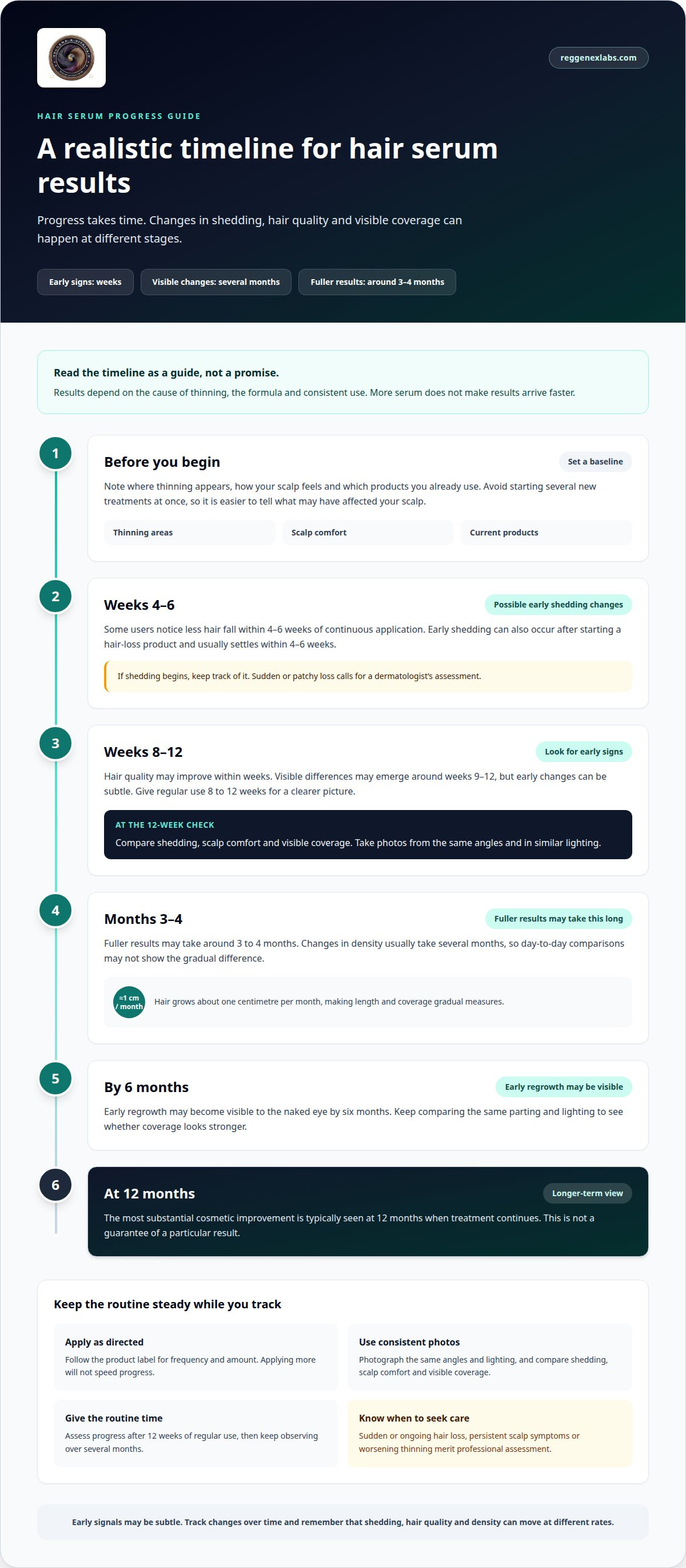
Expected timeline for reduced hair loss and visible new growth
Progress with a serum unfolds over time: changes in shedding may occur before visible regrowth. Track both, because scalp comfort and hair density may change at different rates.
Timeline for Reduced Shedding
Reduced shedding means fewer loose hairs over time, not instant regrowth. Some users notice less hair fall within 4-6 weeks of continuous application. Early shedding can also occur after starting a hair-loss product and usually settles within 4-6 weeks. If shedding begins, a consistent 8 to 12 weeks of use gives a clearer picture. Sudden or patchy loss calls for a dermatologist’s assessment.
Timing of Visible Regrowth
Visible regrowth means new hairs or coverage changes you can see, rather than a sensation on the scalp. Hair quality may improve within weeks, while visible differences may emerge around weeks nine through twelve. Fuller results may take 3 to 4 months, and early regrowth may become visible to the naked eye by six months. Peptides in a formula don’t remove this biological timeline.
Changes in Hair Density
Density describes how much hair appears to cover an area, so small changes can be hard to spot day to day. Hair grows about one centimetre per month, making length and coverage gradual measures. Visible density changes usually take several months; the most substantial cosmetic improvement is typically seen at 12 months when treatment continues. Compare the same parting and lighting to notice whether coverage looks stronger.
Realistic Results and Progress Checks
Realistic results include reduced shedding, improved hair quality, or modest visible regrowth, not doubled volume in 90 days. Assess progress after 12 weeks of regular use, then keep observing changes over several months. Take photos from the same angles and note shedding, scalp comfort, and visible coverage. These markers help show whether the routine is working. Sudden loss, persistent scalp symptoms, or worsening thinning merit a dermatologist’s evaluation.
Role of ingredients such as peptides and caffeine
Peptides, caffeine and plant extracts have different roles in topical formulas. Their presence alone does not show how well a finished serum performs.
Clinically Supported Ingredients and Minoxidil
Minoxidil is an FDA-approved ingredient for topical hair-loss treatment, which distinguishes it from ingredients promoted mainly for scalp care. Peptides and caffeine appear in some formulas, but an ingredient’s name alone does not establish the evidence for a particular product. Check whether claims refer to the finished formula or to an ingredient studied separately. This distinction helps you assess the support behind a product alongside its directions and intended use.
Evidence and Ingredient Limitations
Evidence describes what a study examined, not every product containing the same ingredient. Research on a particular extract, for example, does not automatically establish results for a serum with a different formula. Peptides also vary, so the term does not identify one uniform active ingredient. Look for clear descriptions of the formula and the evidence behind its claims. This helps distinguish scalp-care support from promises of visible regrowth.
Active Ingredient Concentration
Concentration shows how much of an active ingredient a formula contains, but it does not tell the whole story. Ingredients interact with the product’s base, application directions and contact with the scalp. If a label lists caffeine or peptides without concentration details, don’t infer potency from ingredient order alone. Compare the stated directions and claims, then use the product consistently. A higher concentration by itself does not establish a healthier scalp or stronger hair.
Use ingredient information to set realistic expectations: identify the active ingredients, understand the claims and follow the label. A well-chosen formula can support your routine, while the cause of thinning and consistent use also influence progress.
Habits and setbacks that may affect progress
Hair thinning can have several causes, so a serum routine is only one part of the picture. Consistent use, scalp care and individual circumstances all affect how you assess gradual progress.
Habits and Setbacks During Use
Changes in routine can make progress harder to interpret. Missing applications, switching formulas or layering new products can obscure which change affected your scalp. Follow one serum’s directions consistently, and record application dates alongside changes in shedding. Redensyl, for example, is an ingredient name, not a reason to alter the product’s instructions. No topical routine should be expected to work overnight.
Individual Factors Affecting Effectiveness
Personal circumstances can influence thinning and how you respond to a topical routine. Hair grows in three phases, so visible change depends partly on where follicles are in that cycle. Stress, nutrition, scalp condition and the cause of thinning may also affect what you observe. Note these factors over time; they provide context for changes but don’t prove that one ingredient caused them.
Nutrition is one factor to consider carefully. A balanced diet supports general well-being, but taking supplements without understanding your needs won’t establish why your hair is thinning. Track meaningful changes, such as a dietary shift, a stressful period or new scalp discomfort. This record can help distinguish a routine setback from a broader change to discuss with a qualified health professional.
Keep your assessment simple: use the formula as directed, avoid changing several products at once and compare photographs taken consistently. If you begin using a new extract or treatment, note the date and any scalp response. Redensyl and other ingredient names don’t replace a clear routine or explain every cause of hair loss. Gradual progress is easier to interpret when you account for both application habits and personal factors.
Choose a manageable routine and follow it consistently. Track applications, scalp comfort and visible changes together, then use those observations to guide your next hair-care decision.
ReggeneX Labs: ReggeneX Vitalixir Hair Regrowth Serum
ReggeneX Vitalixir Hair Regrowth Serum is a topical option marketed to support hair regrowth. It fits a consistent hair-care routine when you want a serum-focused approach to thinning. The product undergoes clinical testing, while visible changes still depend on factors such as the cause of thinning and regular use.
If you’d like support in shaping your routine, ReggeneX Vitalixir Hair & Scalp Consultation includes a personalized assessment and routine recommendations. ReggeneX Labs also offers a Hair Growth Kit and Vitalixir Shampoo as additional routine options. Choose based on your scalp-care needs and the steps you can maintain consistently, rather than expecting an overnight transformation.
Contact ReggeneX Labs to discuss which routine option fits your hair and scalp goals.
Make your next hair-care step a considered one
Let your observations guide what comes next. Your routine should fit your scalp and daily habits, while helping you monitor the changes that matter to you. Keep hair growth serum results expectations grounded in gradual progress, and use your notes to decide whether your approach still feels right. Results aren’t guaranteed, and persistent or sudden hair loss deserves professional attention.
ReggeneX Labs offers personalized hair and scalp consultations to help turn your concerns into a practical routine plan. A thoughtful conversation can clarify your goals and help you choose manageable next steps without making several changes at once. You don’t need to have every answer before starting.
Contact ReggeneX Labs to talk through your hair-care goals and possible next steps. Move forward with patience, informed choices, and care that feels right for you.
Frequently Asked Questions
When can you see the results?
Visible changes can take weeks or months, and timing depends on what you count as a result. Define your goal before starting, such as fewer broken strands after detangling or less visible scalp around a part. These are different observations. Softer-feeling hair alone does not establish new growth, so focus on the change that matters to you.
Does It Really Work?
“Works” depends on the outcome you expect. A serum may be designed to support scalp or hair care, but that is different from treating every cause of hair loss. Assess the specific product’s stated purpose and directions rather than treating the word “serum” as proof of a particular result. If your goal is unclear, define it before choosing a routine.
Does missing one day ruin the timeline?
No. Missing one application doesn’t erase the care you’ve already given your hair. Resume your usual routine rather than trying to make up for it with extra product. If interruptions happen often, set a reminder or pair the application with an established daily habit. A routine that fits your day is easier to maintain than one built around an unrealistic schedule.
What are the honest limitations of any timeline?
A timeline can help you decide when to assess a routine, but it can’t predict an exact result for each person. Hair length, styling and the way strands sit can change how much scalp shows, even if your underlying hair hasn’t changed. Treat any calendar estimate as a review point, not a deadline that defines success or failure.
Why does it take so long?
New hair needs time to grow long enough to distinguish from surrounding strands. Early changes near the scalp can be difficult to see beneath longer hair or a dense style. A short new strand, for example, may blend into nearby hair until it grows longer. That gap between a small change and an obvious cosmetic difference can make progress feel slow.
Will results last if I stop using the serum?
There’s no single rule for how long changes last after stopping. What happens depends partly on why thinning began and what care continues afterward. If you’re considering stopping because of irritation or another concern, don’t keep applying a product that causes discomfort. If you stop for another reason, note the change and observe your hair without assuming the same outcome applies to everyone.